Plain language advocacy
Spread user-centered content practices in NYC government through content trainings and consultations.
Services
- Plain language
- Training
- Editorial workflow
- Style guidelines
- Copywriting
- Accessibility
- Localization
Background
Historically, governments have communicated in a complex, formal style inaccessible to many. As NYC brings more of its services to digital spaces, it has the opportunity to adapt how it communicates and better serve New Yorkers.
As the only dedicated content specialist at the Mayor’s Office for Economic Opportunity, I help empower teams to adopt best practices for writing on the web and consider New Yorkers at the center of what they say. I’ve trained and consulted with the data, design, and policy teams in my unit, as well as others from different City agencies.
What I do
Trainings
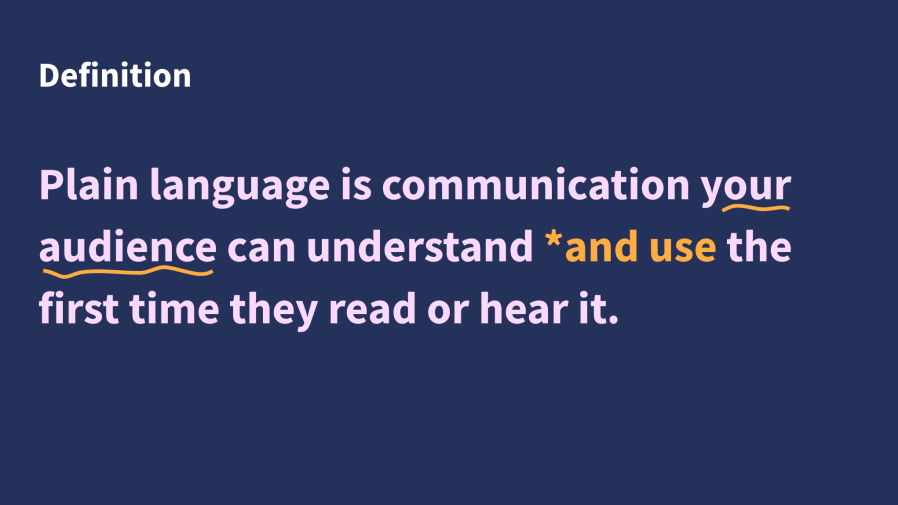
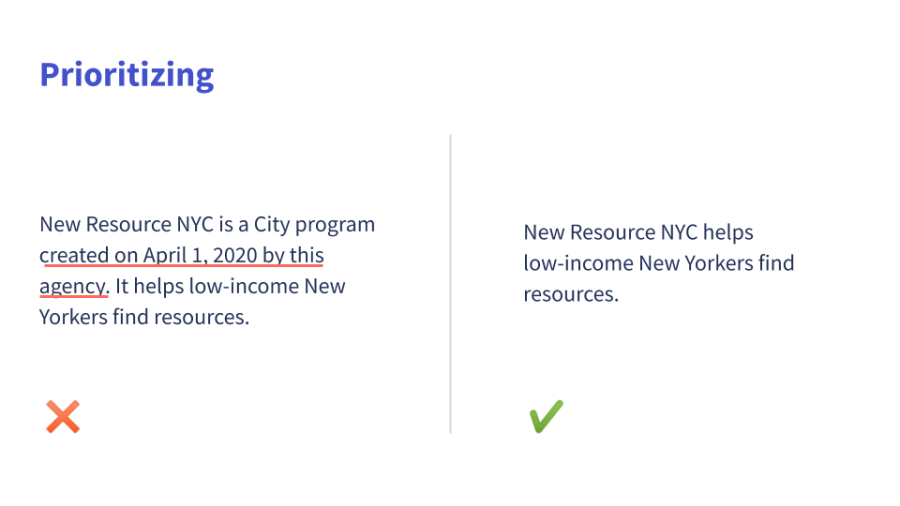
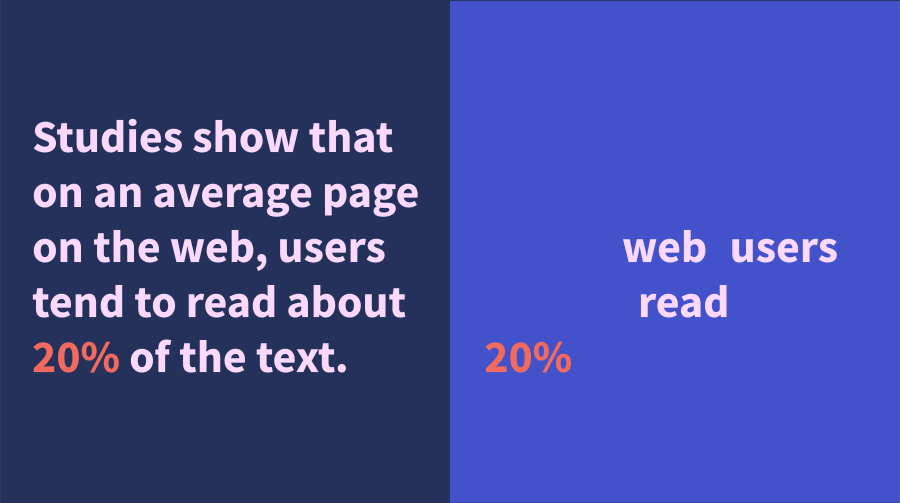
To support those new to plain language or writing on the web, I developed an hour-long training that introduces what plain language is, why you should use it, and guidelines for using it. The goal of the training is to not only provide the tools to write in a more accessible way, but also reframe communication around the audience.
Reviews and consultations
I also provide ad hoc support to teams and projects. Activities have included:
- Content reviews and edits
- Setting up project-specific style guides
- Helping develop editorial workflows and governance models
- Sharing content testing methods
In each instance, I begin by seeking out and defining teams’ audiences and goals. I also take the time to explain suggestions to help teach content best practices.
 Laura Kerry